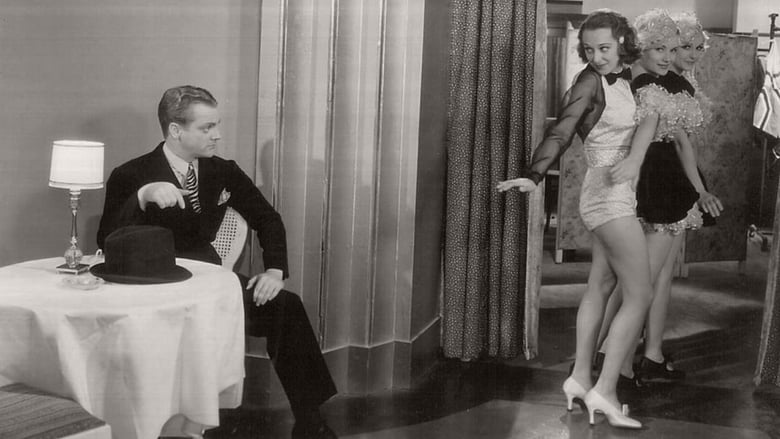
[Still from G-Men (1935)]
During the 1930’s, American society was striving to re-define manhood and masculinity, in an era in which typical male and female roles were being turned on their heads. While more and more women had been joining the workforce in the years before 1930, the 1929 market crash led to a renewed sense of gravity as many women sought to earn a living for themselves, and their families who had previously depended on the money earned by their sole breadwinner husbands, fathers, and brothers. This widespread increase in female labour, and the concept of women earning their own money during this period, in which men still cultivated a patriarchal society that promoted the social norms that dictated the man’s role as the provider, and women as home-makers. This mutation of typical gender roles therefore must be acknowledged as having an enormous impact on the universal American male’s psyche during this period, or as Josep Armengol summarises, “the Great Depression caused millions of American males to feel emasculated by their incapacity to provide for their families.”(Armengol, 2014.) This period of emasculation was of course followed by many attempts to re-masculinize the nation, as artists, writers and films began to portray their male characters as specimens of incredible physical strength, which physiques that implied labour intensive work that created strong bodies.
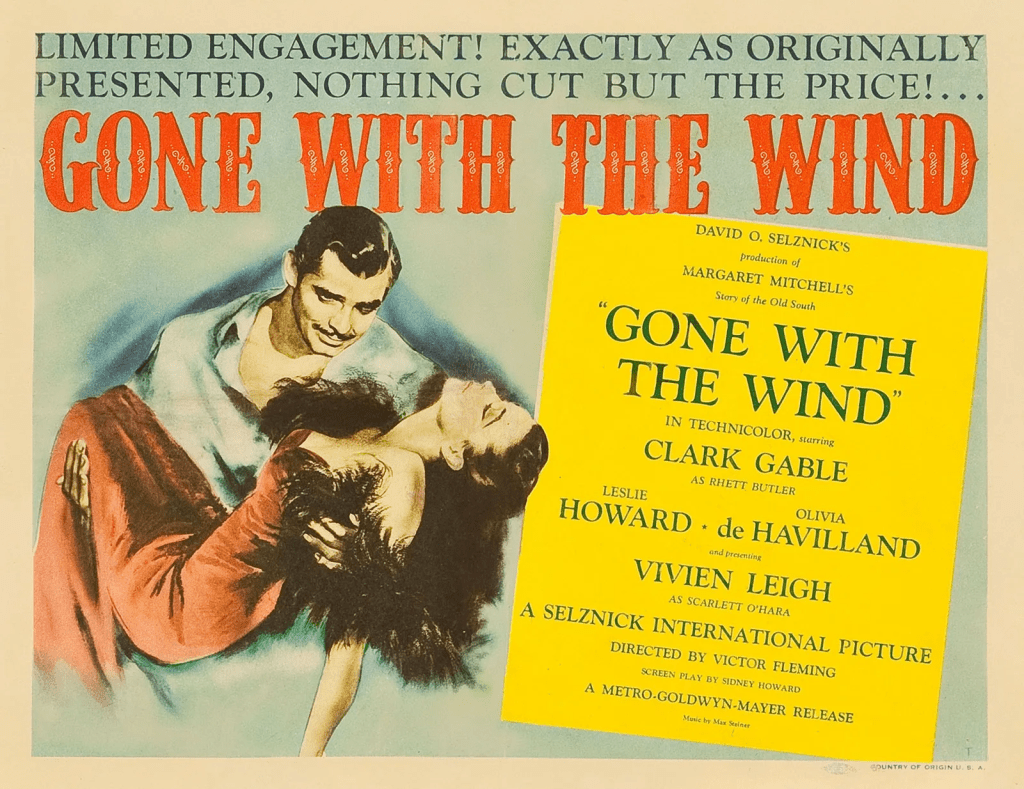
[Promotional material for Gone With the Wind (1939)]
The Great Depression somewhat shifted the perception of what the ideal man was, with a rising focus in film on the middle class working man; whose labour hardened body was strong enough to protect others, and take on those who would offend him, becoming popularised and seen depicted everywhere, with public murals depicting such men, and body building becoming one of the most successful businesses of the era. Though the rugged physicality of the male form was always tied up with the cultural ideal of masculinity in media, during the Depression it was given a more deliberate focus as being an integral part of manhood. Men were similarly depicted in film which was wildly popular in the 1930’s, and by this point in time most government bodies, and Hollywood studios, were aware that “it (cinema) performed a crucial role in the cultural distribution and articulation of a national identity”,(Tell, 2018) therefore by depicting protagonists and heroes with physical muscularity being equated with morality, thus, the concept of what it meant to be a man shifted away from the glamour of the 1920’s office worker toward a more rugged, less refined sense of manhood. Hollywood stars such as James Cagney, and Paul Muni catapulted to fame by embodying characters that exuded strength and power, the distinctly masculine ideals of the era, however the characters were also relatable, and everyday types that the male viewer could potentially envision themselves as.
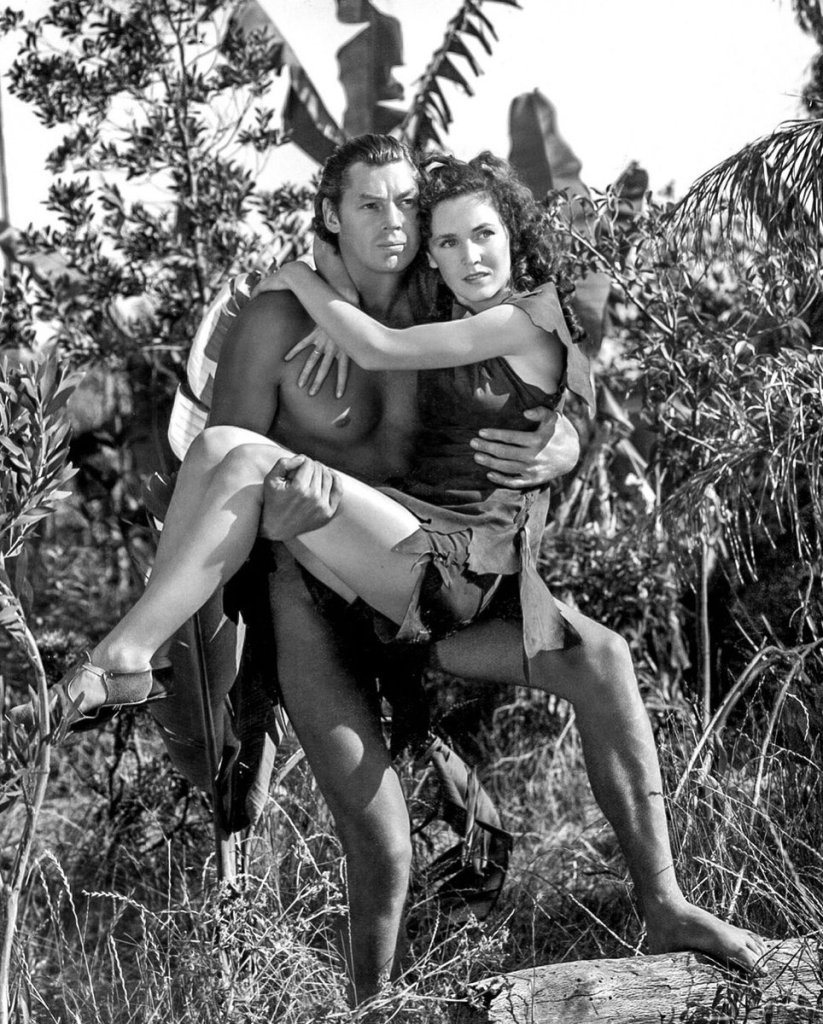
[Still from Tarzan Escapes (1936)]
Hollywood films began to cultivate the country’s perception of manhood and masculinity, shaping their audiences ideas on what kind of man was attractive to women, how men should act to be seen as respectable, and important rather than impotent, or feminine. Hollywood movies reinforced social norms, post 1934 when the Motion Picture Production Code, better known as the Hays Code began to more strictly censor the types of lifestyle that films could depict. The conservative ideology that the Hays Code pushed Hollywood cinema to depict, imparted a more toxic form of masculinity on the public. Queer male characters, or male characters who were queer coded as effeminate, or emotional, were depicted as dangerous or villainous, and implied to male viewers that queerness, or even very close male relationships, were particularly unmasculine, and therefore were undesirable traits for men to display, spreading homophobic ideation, and the idea that men should be bastions of strength, and should not share, or rely on anyone else to help him with his problems. The 1930’s cinema was an era that valued raw masculinity, physically strong men, and those who refused to bow to authority figures; this was perhaps shaped by the popularity of the gangster character, the adventurer, the swashbuckler and the cowboy; thus it can be considered that cinema in the 1930’s, offered films that would counter male emasculation by offering strong male characters that they could identify with, and aspire to be like.
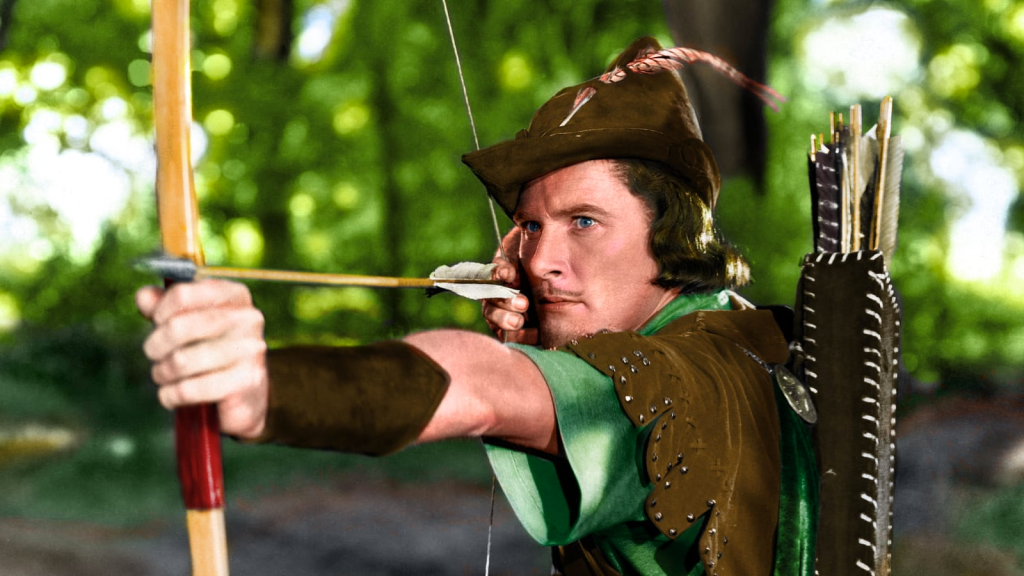
[Still of Errol Flynn in The Adventures of RobinHood (1938)]
One actor who became synonymous with manhood in the 1930’s was Clark Gable, who rose to Hollywood fame after playing prominent leading man roles during the era. In Possessed (1931), Red Dust (1932), It Happened One Night (1934), China Seas(1935), and Saratoga (1937), Gable played the main love interest, or leading man, gaining recognition for his acting talent and becoming a household name in Hollywood and beyond. One reviewer called him “a masculine sensation”, (Haralovich, 2009) and declares him “arguably the first leading man to bring [to the screen] ‘real’ masculine power- the power to tame and control women and land (and less masculine men).”(Haralovich, 2009.) In several of his earlier roles, Gable’s characters demonstrated violence toward women, such as in Night Nurse (1931), and one theorist wrote “Gables allure was somewhere between savagery and sadism,”(Haralovich, 2009.) and several Hollywood outlets at the time, such as Photoplay, described him as an epitome of masculinity. Gable’s star persona, and other roles in the 30’s cemented his position as a male icon of the age, exemplifying traits that would long be associated with masculinity, strength, desirability, dominance, and charisma. Gable is an iconic actor of the 1930’s and without a doubt served as a role model to many male cinema-goers who viewed his characters as bastions of manhood and sought to emulate him.
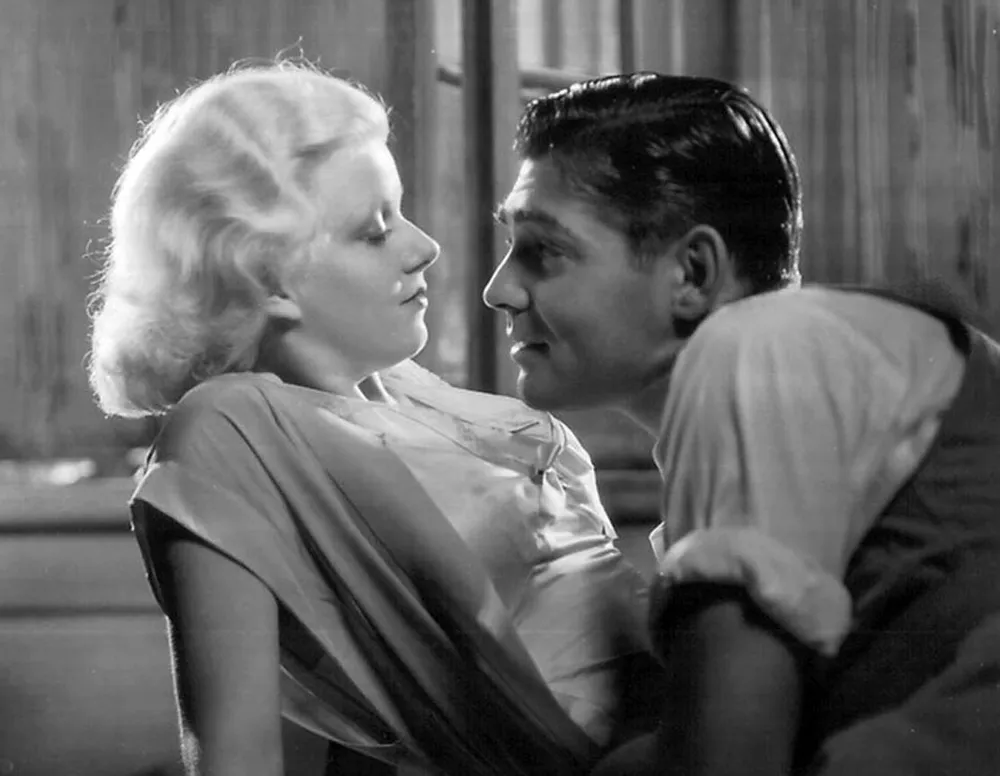
[Still from Red Dust (1932)]
Bibliography
Armengol, Josep M. Gendering the Great Depression: rethinking the male body in 1930s American culture and literature. Journal of Gender Studies. 2014. pp 59-68.
Haralovich, Mary Beth. “Flirting with Hetero Diversity.” Hetero: Queering Representations of Straightness (2009): 37. [https://books.google.ie/books?hl=en&lr=&id=3imXF7HdWpEC&oi=fnd&pg=PA37&dq=clark+gable+masculinity&ots=dgKyHs2khV&sig=VJAbHPgbZMKHtbahg6FYDsv0qo&redir_esc=y#v=onepage&q=clark%20gable%20masculinity&f=false]
Kirby, Nicholas B. HUMANIZING THE GANGSTER: AN EXAMINATION INTO THE CHARACTER FROM HAWKS’ TO DePALMA’S SCARFACE. 2008. [document (psu.edu)]
McDonald, Paul. The star system: Hollywood’s production of popular identities. Vol. 2. Wallflower Press, 2000.
McLean, Adrienne L., ed. Glamour in a golden age: Movie stars of the 1930s. Rutgers University Press, 2011.
Tell, Rory. Shifting Attitudes on Masculinity in 1930s American Film. 2005. [Tell Final.pdf (jhu.edu)]
 And that's how Lucy sees it